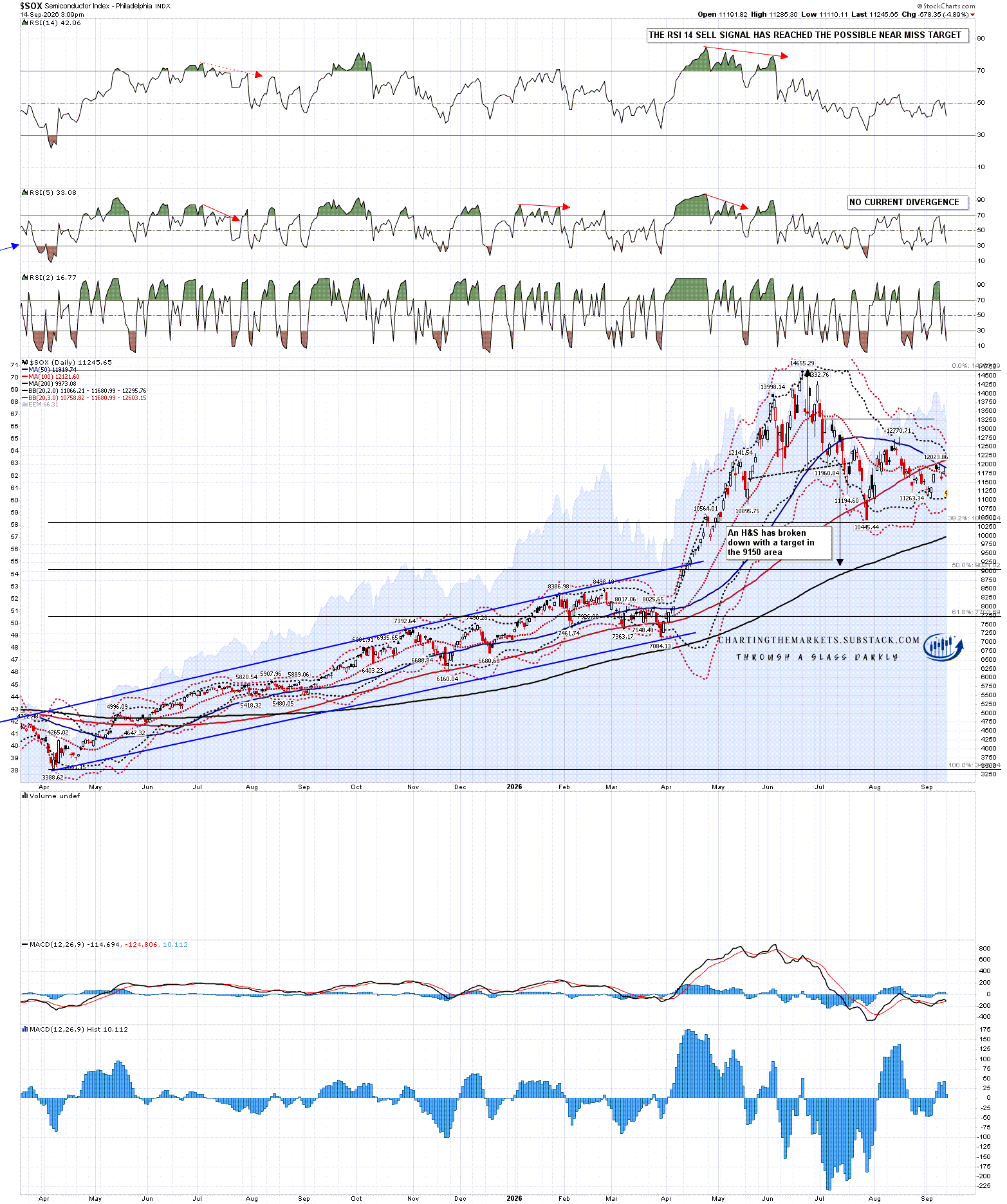
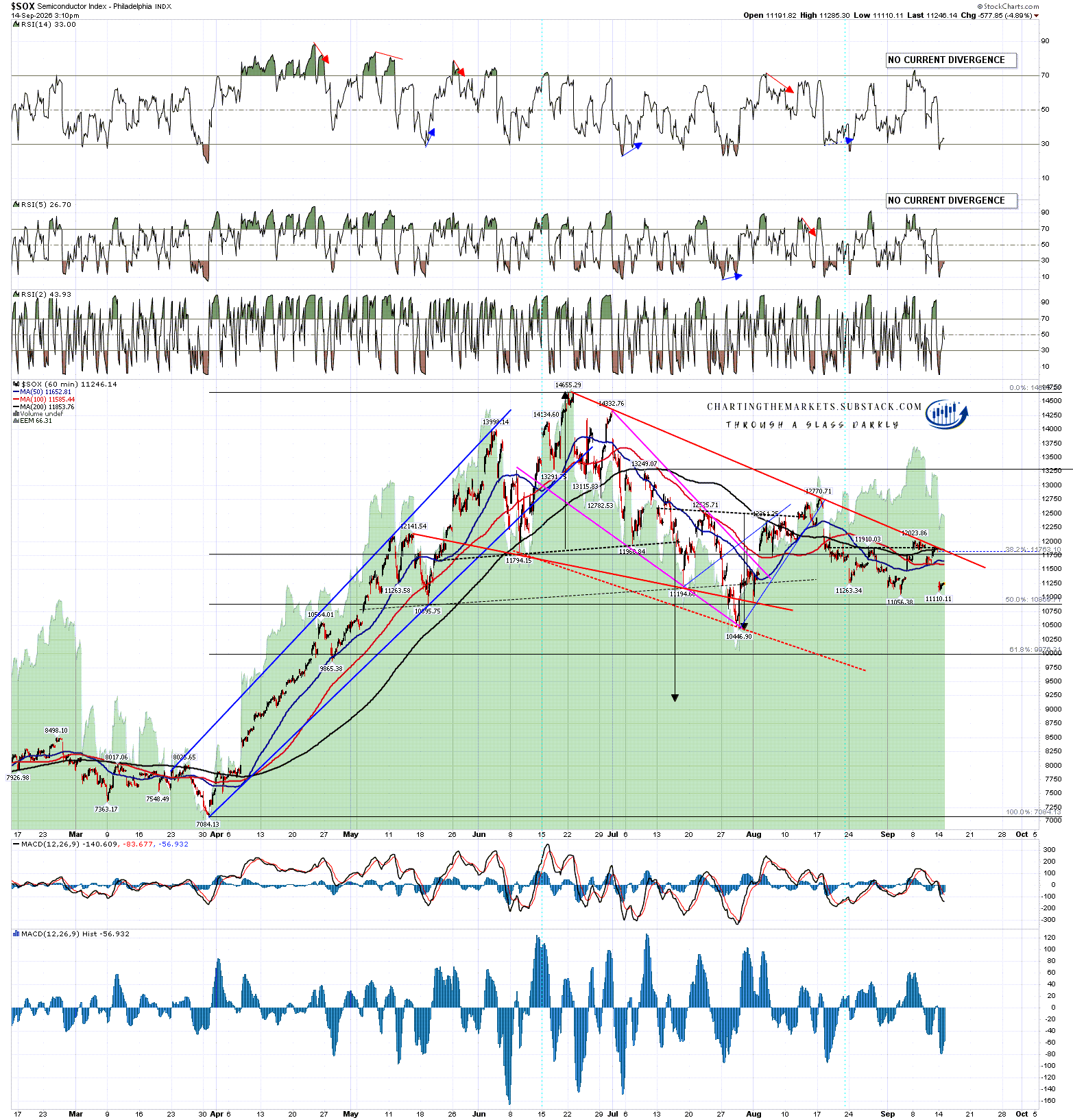
In my last post on Monday 14th September and my previous posts on Friday 4th September and Wednesday 2nd September I was looking at the case that the retracement since the start of August has been a bullish consolidation that would likely be followed by retests of the all time highs on some or all of SPX, QQQ, DIA and IWM.
Since then we have seen a strong rally on Tech on Friday and Monday that delivered an all time high retest on QQQ but so far has failed to deliver a corresponding all time high retest on SPX.
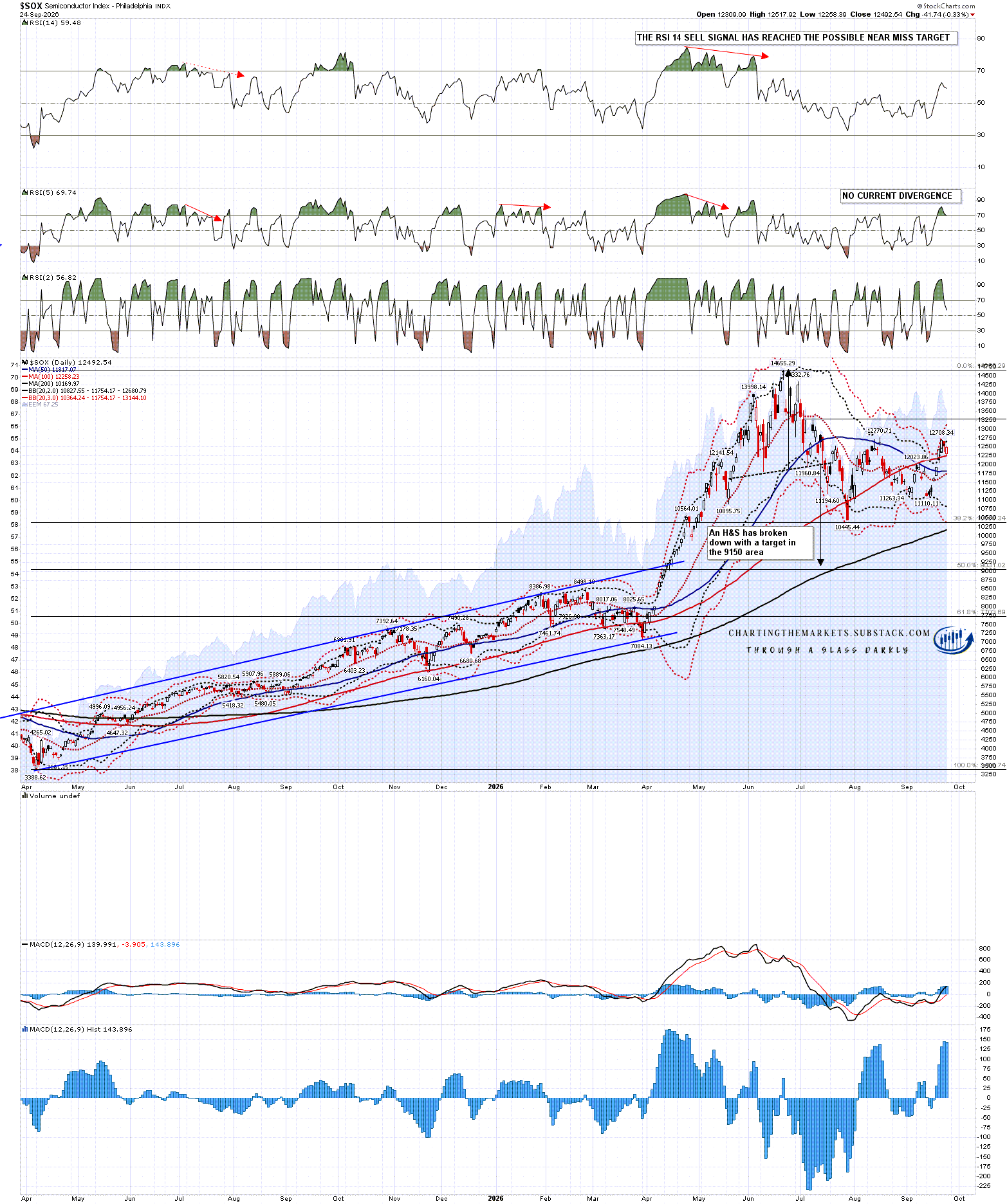
I have been saying all along that what happened on the Philadelphia Semiconductor Index (SOX) was likely to be key, as high retests were only likely if Tech led the retests. On Friday last week SOX finally closed over the 50dma and declining resistance from the high and that delivered the retest of the all time high on QQQ earlier this week.
That was the first of two big levels on SOX of course, the second higher level would be a break over the H&S right shoulder high on SOX at 13,249.07, and a break over that level would fail that H&S and open a target at a retest of the all time high there. Until we see that failure this move on SOX will continue to look like a bear flag forming from the July low.
SOX daily chart:
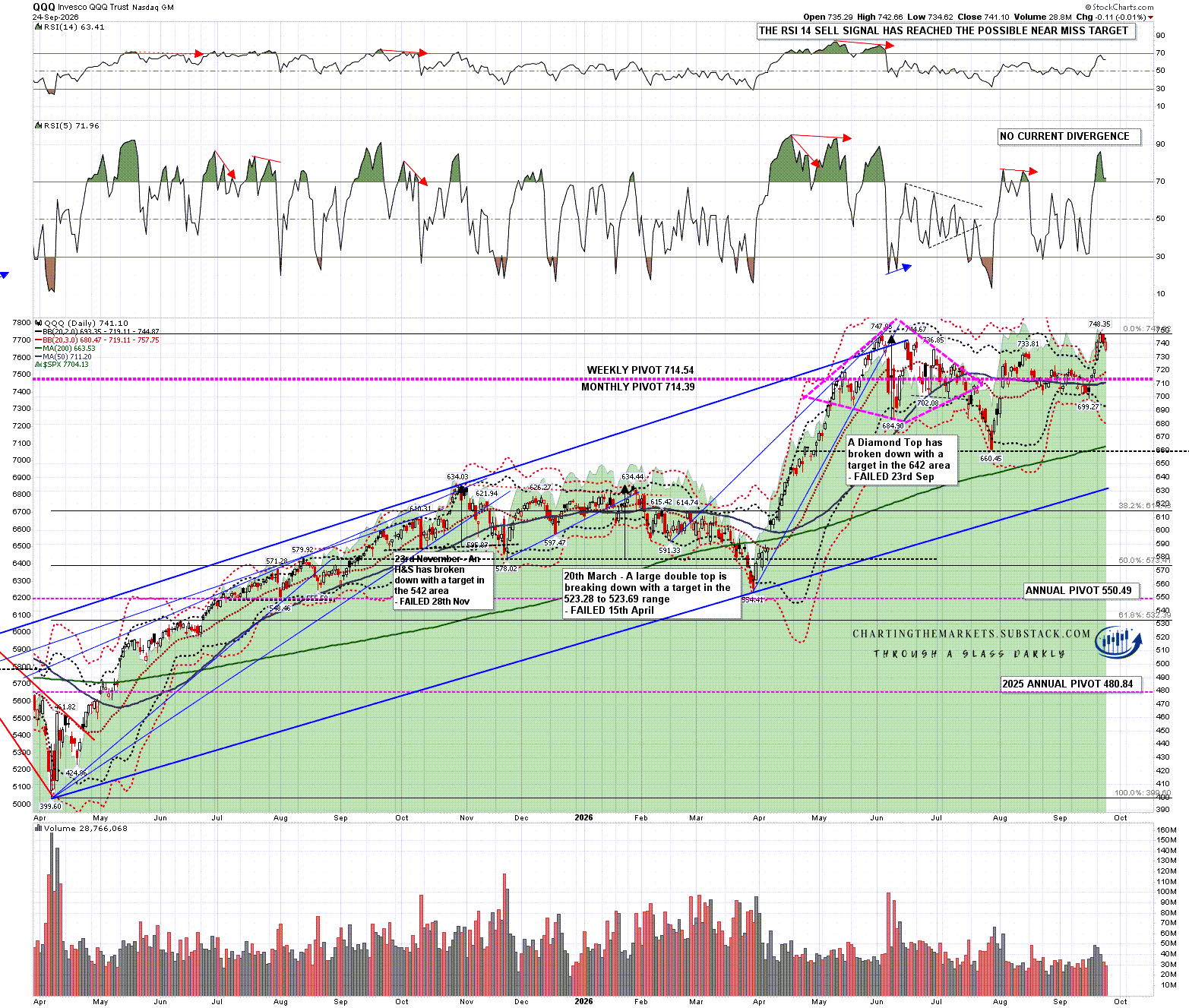
On QQQ the high retest failed the diamond top that broke down in July and has set up a beautiful possible double top with support at the July low at 660.45. On a sustained break below that level the double top target would be in the 582-3 area, close to a 50% retracement of the move up from the low in April 2025.
QQQ daily chart:
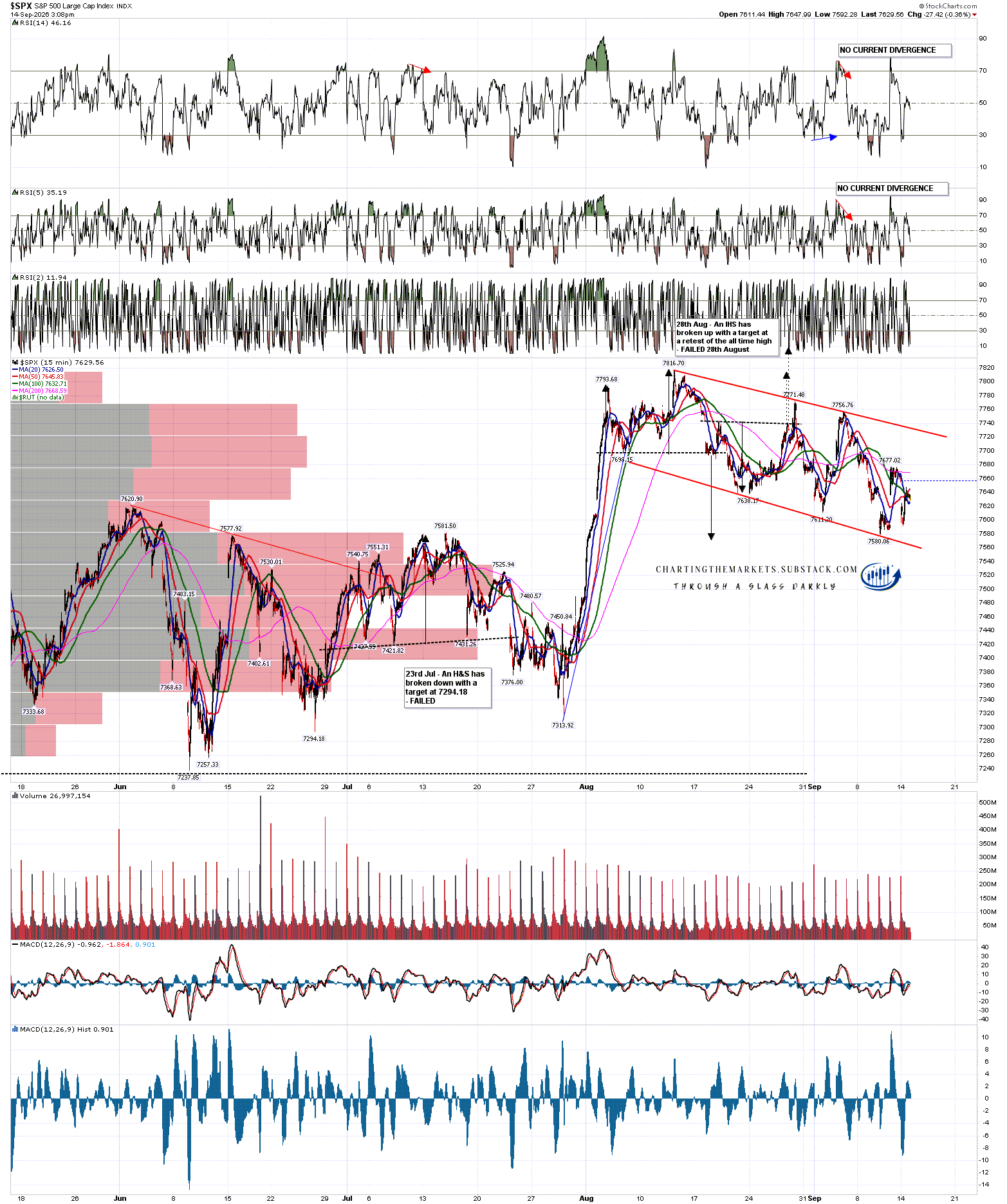
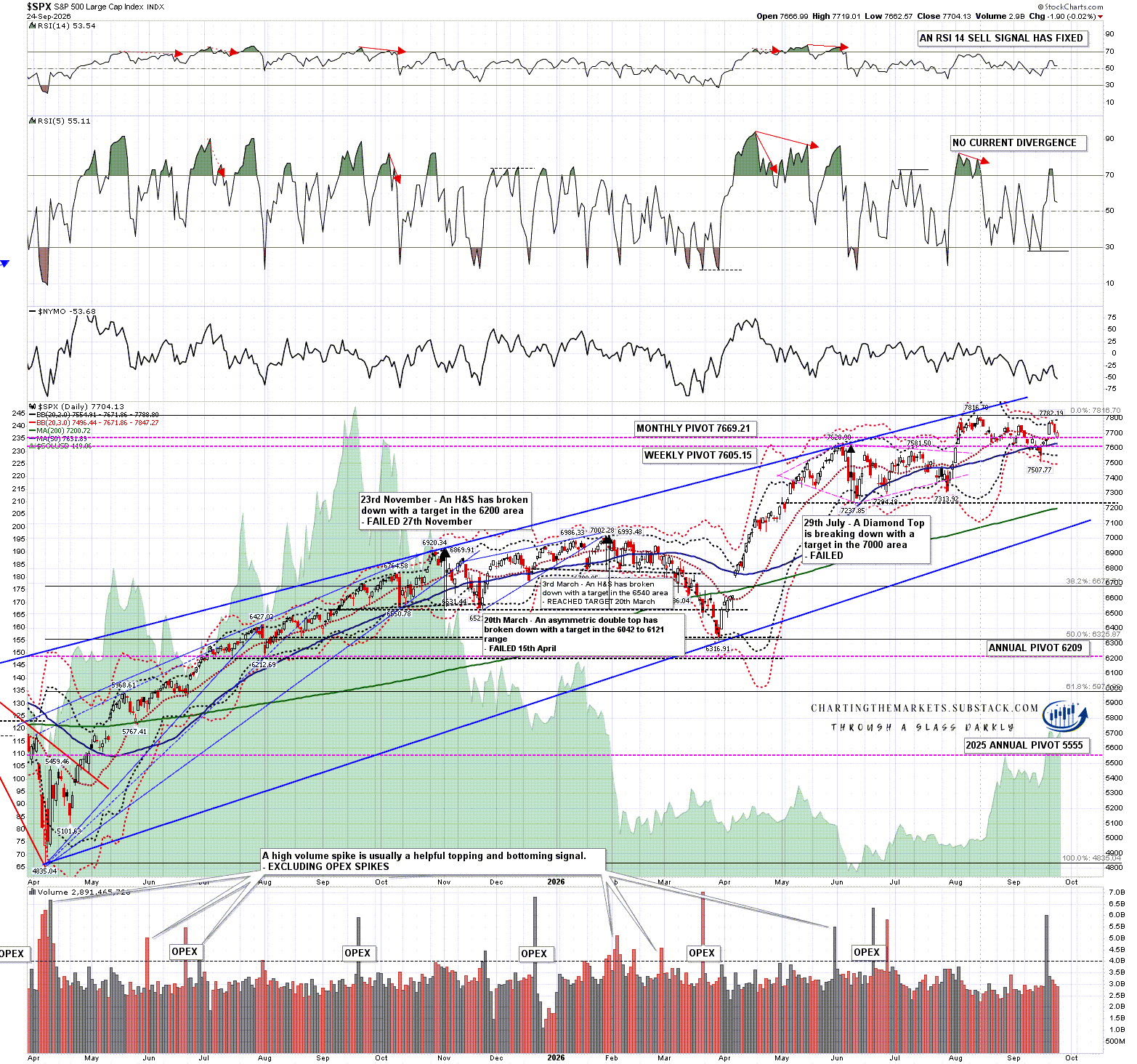
The rally into that new all time high on QQQ was effectively all Tech, but SPX rose strongly as well due to the high Tech proportion of SPX. The rally peaked 34 handles below the all time high, but unless a larger bull flag is forming, that leaves a retest of the all time high as unfinished business. I am looking for that all time high retest in the next few days.
If seen that would set up another possible double top, with support at the September low at 7507.77, and on a subsequent sustained break below that level the double top target would be in the 7200 area, close to both rising support from the April 2025 low now in the 7080 area, and the possible asymmetric double top support or H&S neckline in the 7220 area.
SPX daily chart:
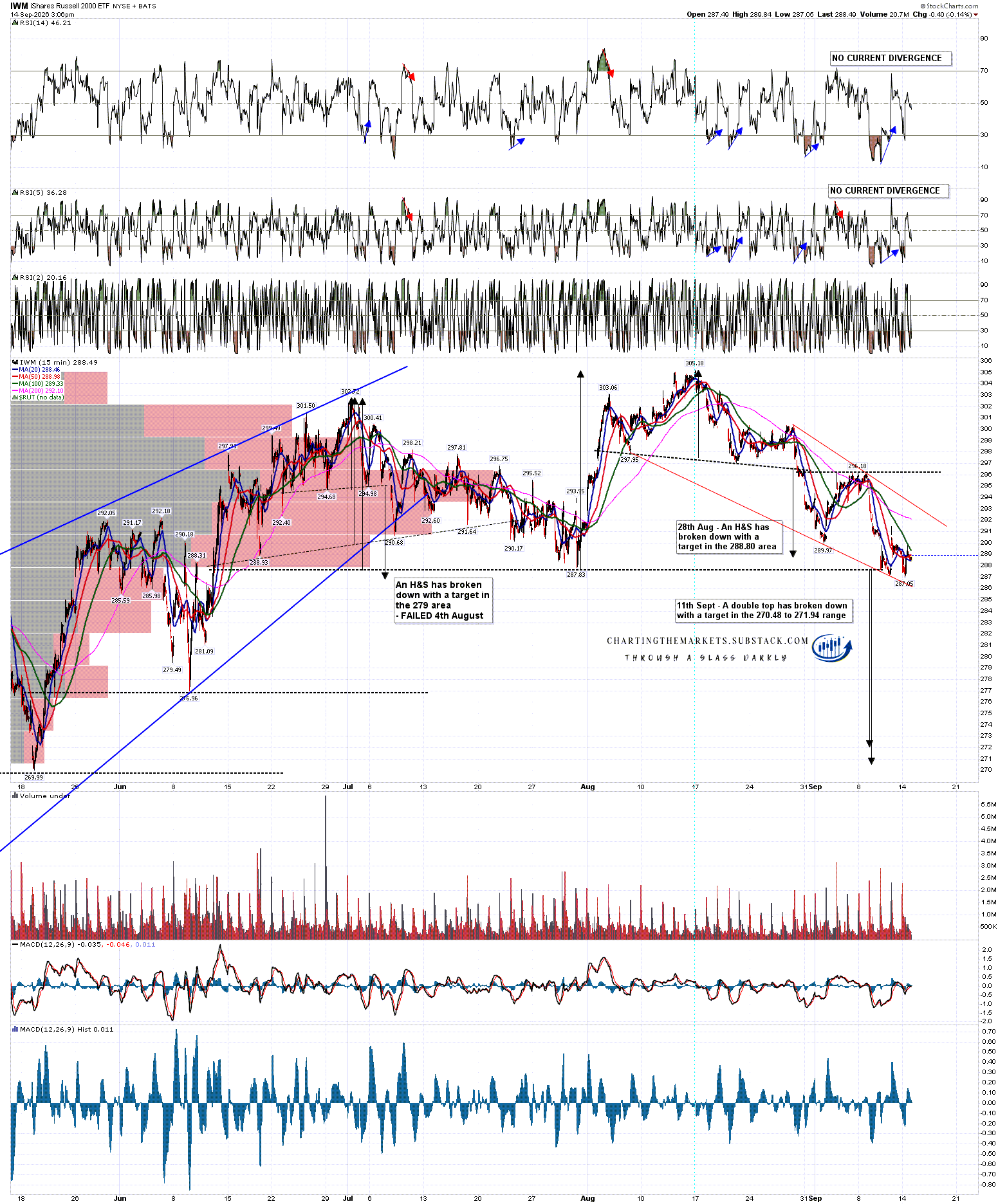
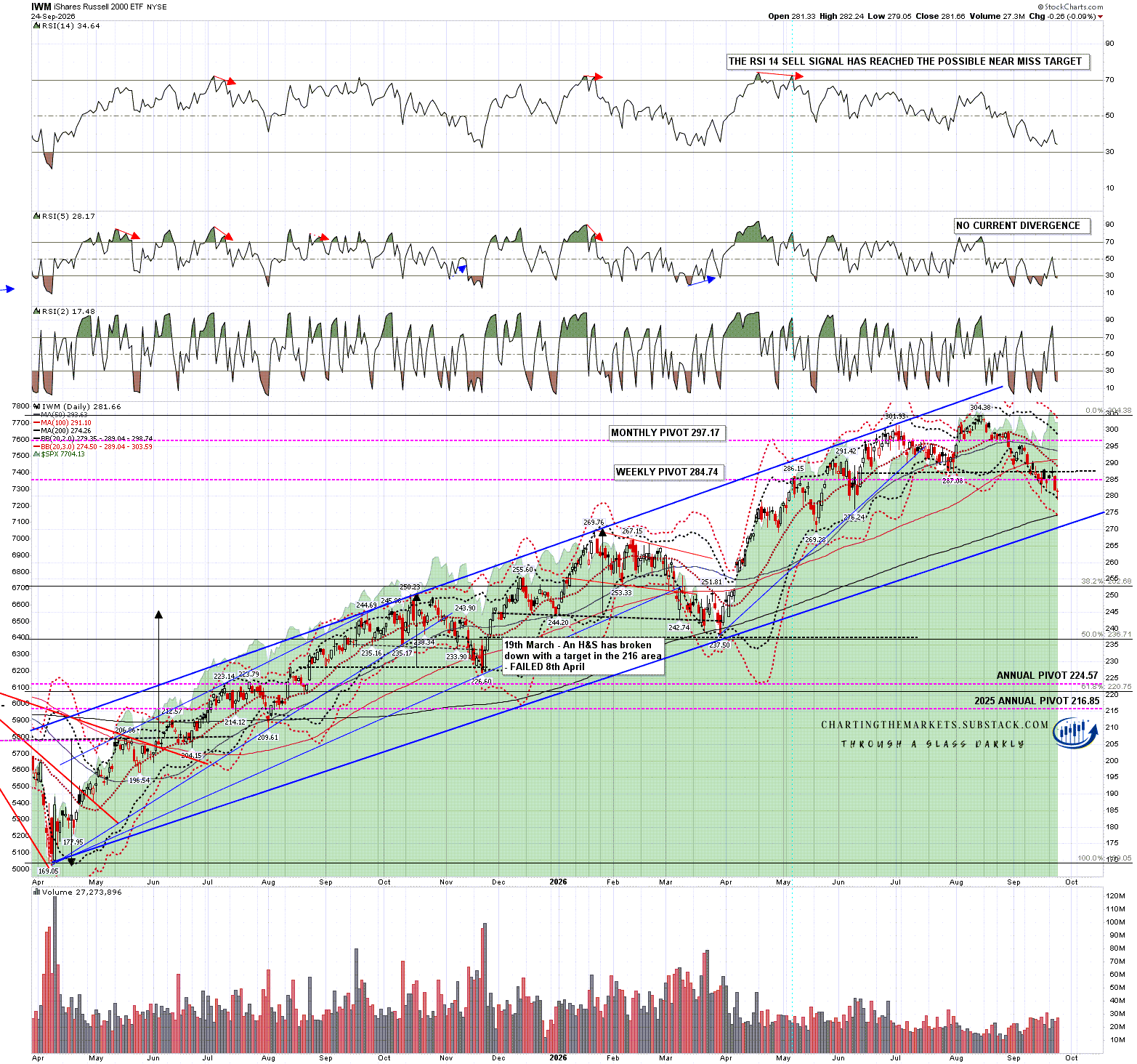
IWM and DIA didn’t meaningfully participate in Monday’s rally, and made new lows for September yesterday but on IWM a double top has already formed and broken down with a target in the 270.48 to 271.94 range, close to a larger possible H&S neckline in the 269 area. If SPX retests the all time high and fails there then that double top might just play out after that.
There is a possible alternate scenario here where a rally might set up the right shoulder on a larger H&S with the ideal right shoulder high in the 291-2 area. An all time high retest does not look likely unless the next move up is much broader based than the last one.
IWM daily chart:
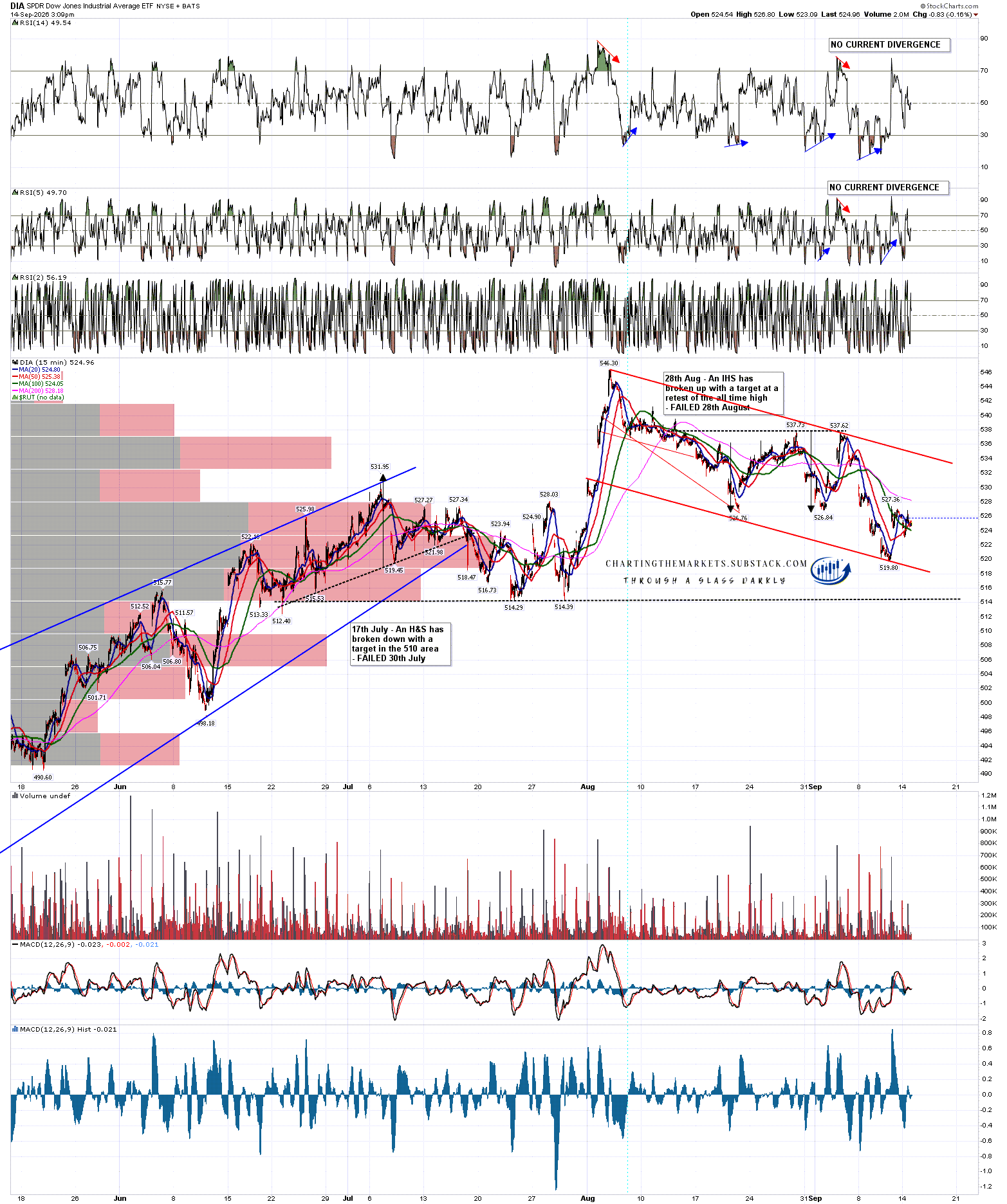
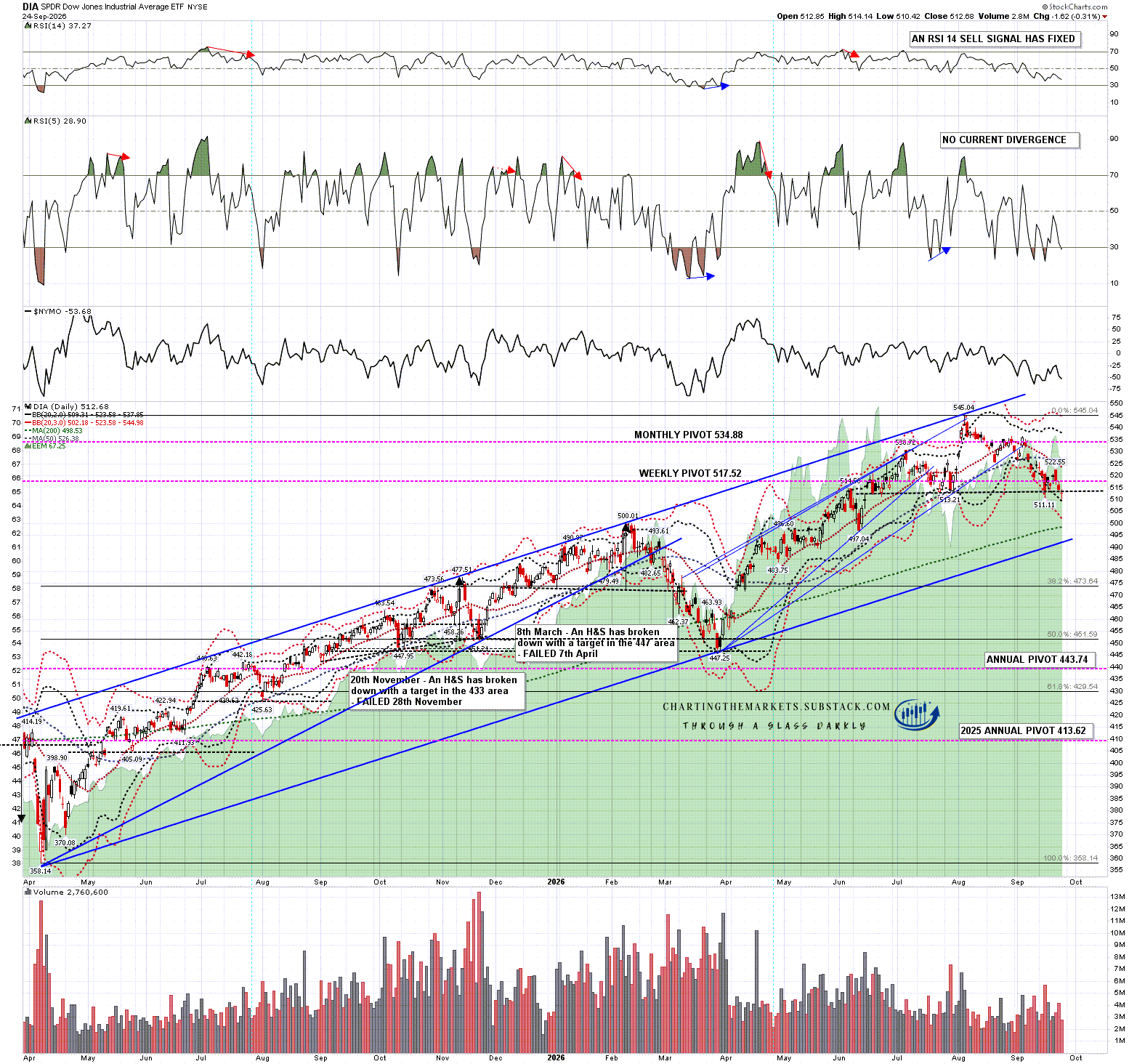
So if SPX retests the all time high, that sets up a possible double top to join the one set up on QQQ earlier this week. IWM already has a decent double top setup that has broken down. That leaves DIA and there I’m watching a possible H&S forming, which would have an ideal right shoulder high in the 530-1 area. After yesterday’s retest of the September low there is a possible small double bottom setup there that on a sustained break over 522.85 would have a target in the 534-5 area.
An all time high retest again does not look likely unless the next move up is much broader based than the last one.
DIA daily chart:
One key reason why I have been seeing the retracement of the last few weeks as a likely bullish consolidation is that there was no decent topping setup on two of these four US indices. If this plays out the way I expect over the next few days then there is a good chance that we will then have decent topping setups on all four. At that point we will have an inflection point from where we could see a much larger retracement on equity indices.
Whether we see that larger retracement would depend on a multitude of factors like the Iran War, crude oil shortages, diesel and gas prices, bond yields, trade conflicts and so on, but for me I’ll primarily be watching to see whether the H&S right shoulder on SOX is broken. If another big leg up on Tech is starting, that would be the main reason in my view to be bullish on equities here. In the absence of that I’d be leaning towards seeing that larger retracement.
If you like my analysis and would like to see more, please take a free subscription at my chartingthemarkets substack, where I publish these posts first. I also do a premarket video every day on equity indices, bonds, currencies, energies, precious commodities and other commodities at 8.45am EST, but only for paying subscribers. Other places to find me are my page on the platform previously known as twitter, and my YouTube channel.